Own Your Corner of the Internet
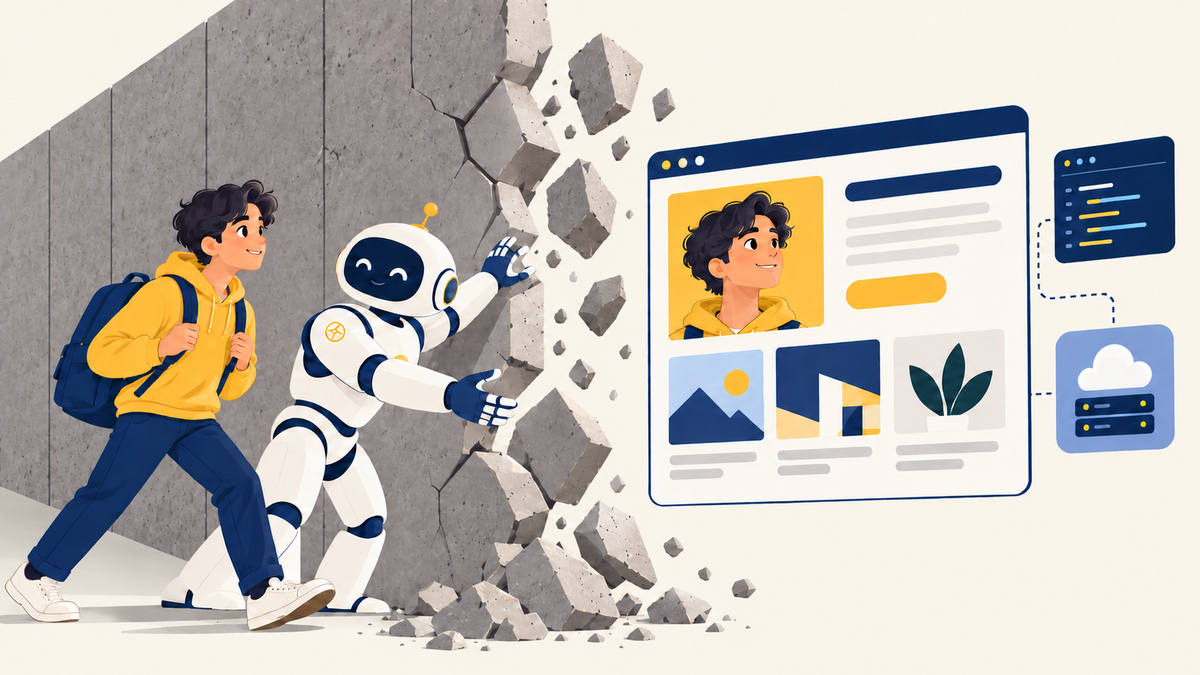
The barrier is collapsing.
In November 2022, GitHub reported more than 94 million developers on its platform. By 2025, that number had grown to more than 180 million.[1] By the end of the first quarter of 2026, there were 392.5 million registered domain names worldwide, up 6.5% from the previous year.[3]
The numbers, Mason, what do they mean?!
Taken together, these numbers tell one story. More people are building software, AI is now part of how they build it, and more of them are planting a flag online under a domain they own. The interesting question is not what that means for the industry, but what it means for each person.
What does a collapsing barrier mean for you?
It means that building and publishing something under your own name is more accessible than it has ever been. A personal website can serve as a central home for your work, ideas, projects, résumé, or business, giving you more control over how you present yourself than a profile on someone else’s platform. LinkedIn, Instagram and GitHub are rented spaces with fixed formats. Your own domain gives you control over presentation, content, and identity. Historically, a custom website required money or technical expertise. AI has dramatically reduced the barrier to entry, while basic hosting can be free and a domain can cost roughly the price of a couple of coffees each year.
I find this shift particularly striking because I used to work as a software developer. A few years ago, taking an idea for a website and putting it online meant knowing how to write code, navigate development tools, manage dependencies, work with version control, configure a server, and deploy an application. I had spent years learning these skills, both academically and professionally. Today, AI can guide someone through much of that same workflow, explain unfamiliar concepts as they encounter them, generate code, troubleshoot errors, and help translate an idea into something that actually works. The technical infrastructure has not disappeared. The amount of technical expertise required to start using it has changed drastically.
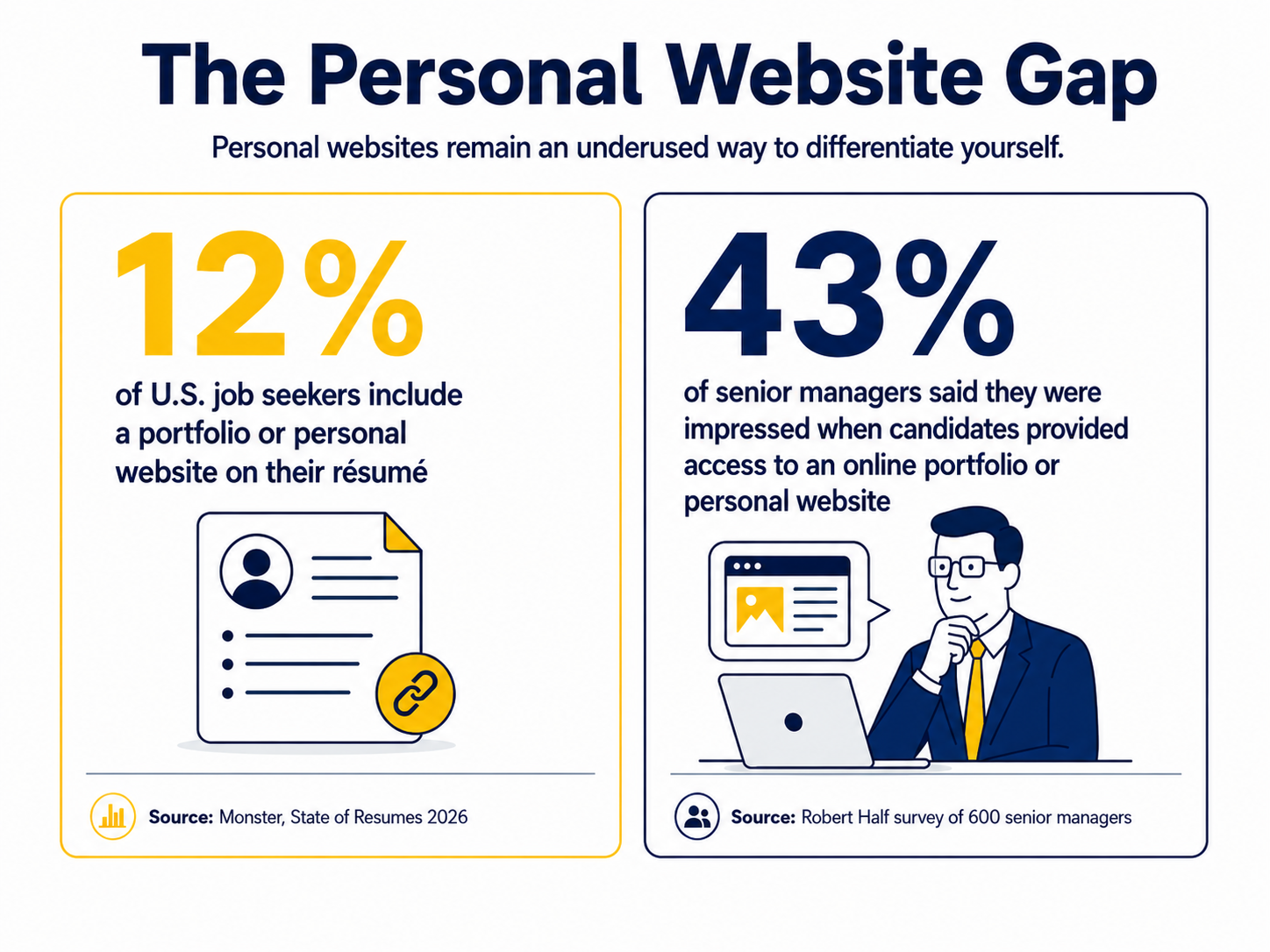
What does a personal website actually signal?
The value of a personal website goes beyond having another link on your résumé. It gives you a place to show evidence of what you have actually done, and a space to express who you are beyond the constraints of a resume or platform profile. A résumé might tell someone that you built a product, led an organization, wrote an article, or worked on a research project. Your website can bring that work to life through interactive experiences and intentional design, while connecting everything through an identity that is distinctly yours. It also signals something increasingly valuable in an AI-enabled world, a bias for action. It shows that you are willing to take an idea, use the tools available to you, and turn it into something real.
Is simply having a website enough?
Probably not. A website can reinforce your identity, but it can also dilute it if the experience feels cluttered, generic, or disconnected from what you are trying to communicate.
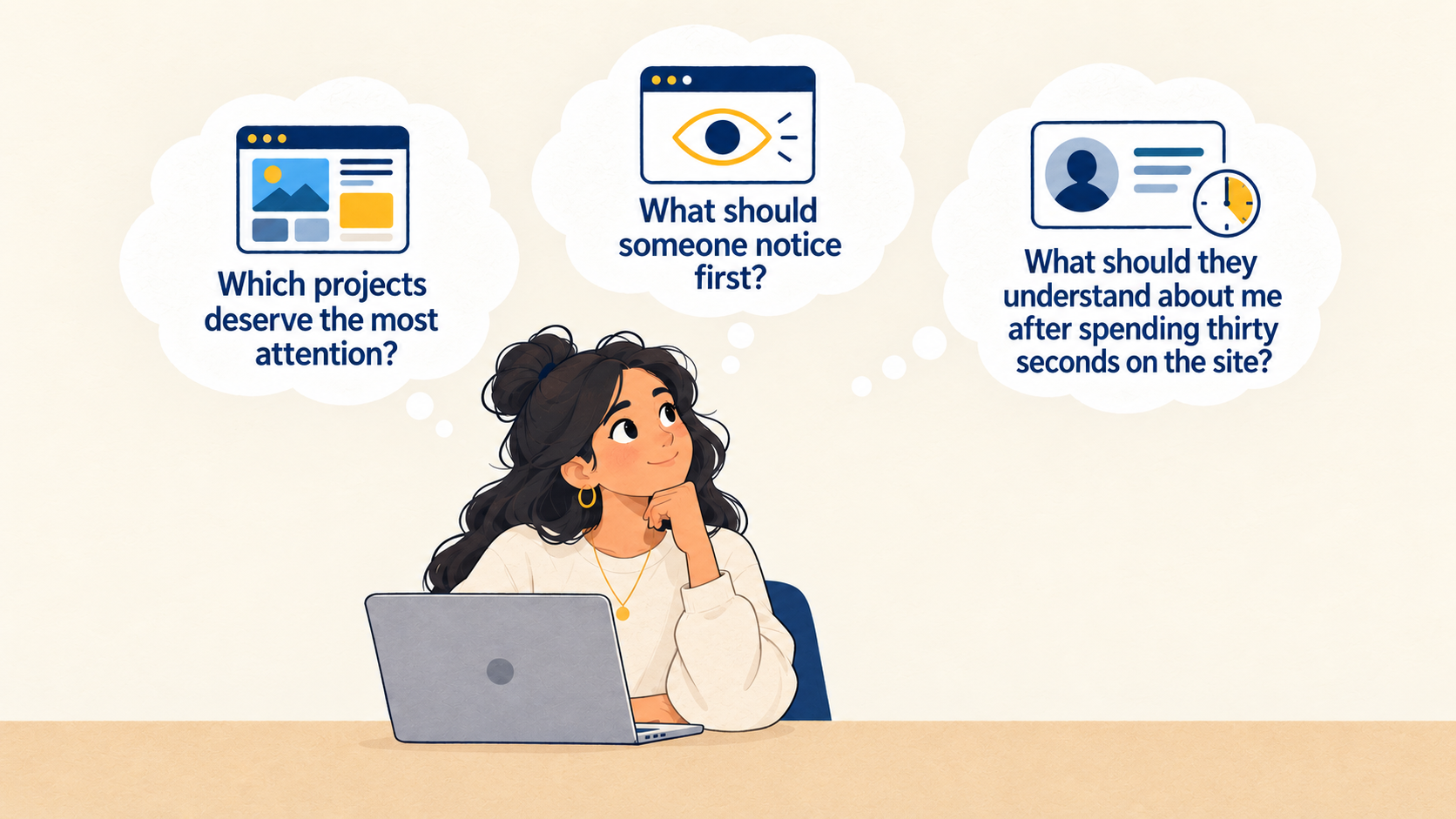
These decisions do not need to be complicated, but they should feel deliberate. You don’t need to turn your portfolio into an art project. Intentionality shows up in the small choices such as the order of your projects, the amount of text on a page, the images you use, the navigation, the color scheme and typography, and even what you choose to leave out. Each of these decisions shapes how someone experiences your website and, by extension, how they experience you.
How do you know if it's working?
Once your website is live, you do not have to guess how people are using it. Basic analytics can show you which pages people visit, what they click on, how long they stay, and where they leave. If nobody is opening a project you thought was important, or visitors consistently drop off on a certain page, that is useful feedback about whether the impression you are trying to create is the one people are actually receiving. You do not need to obsess over the numbers. Check in occasionally and let the patterns guide small changes.
Your website should evolve with you as well. As your projects, interests, and goals change, so should what you choose to highlight. Treat the site as something living. Observe how people engage with it, update what no longer represents you, and keep refining the way you present yourself.
You keep saying it is easier now, so what do I actually need?
At its simplest, hosting your own website requires three things. The code, a domain name, and a hosting service. Think of your website as a house. The code is the house itself, every room a visitor can walk through and all the wiring behind the walls. The hosting service is the plot of land the house sits on. The domain is the street address, the thing people type in to find their way to your door. You need all three before anyone can show up and look around.
So how do you actually build one?
Find out in our upcoming articles, sign up to stay plugged in.
TLDR; Own your corner of the internet
Building something under your own name is now cheaper, faster, and far more accessible than it was a few years ago. What still matters is the thought you put into it. The identity you create, the work you choose to show, and the decisions you make about how you want to be perceived.
AI can help you build the website. The brand you build through it is still yours.